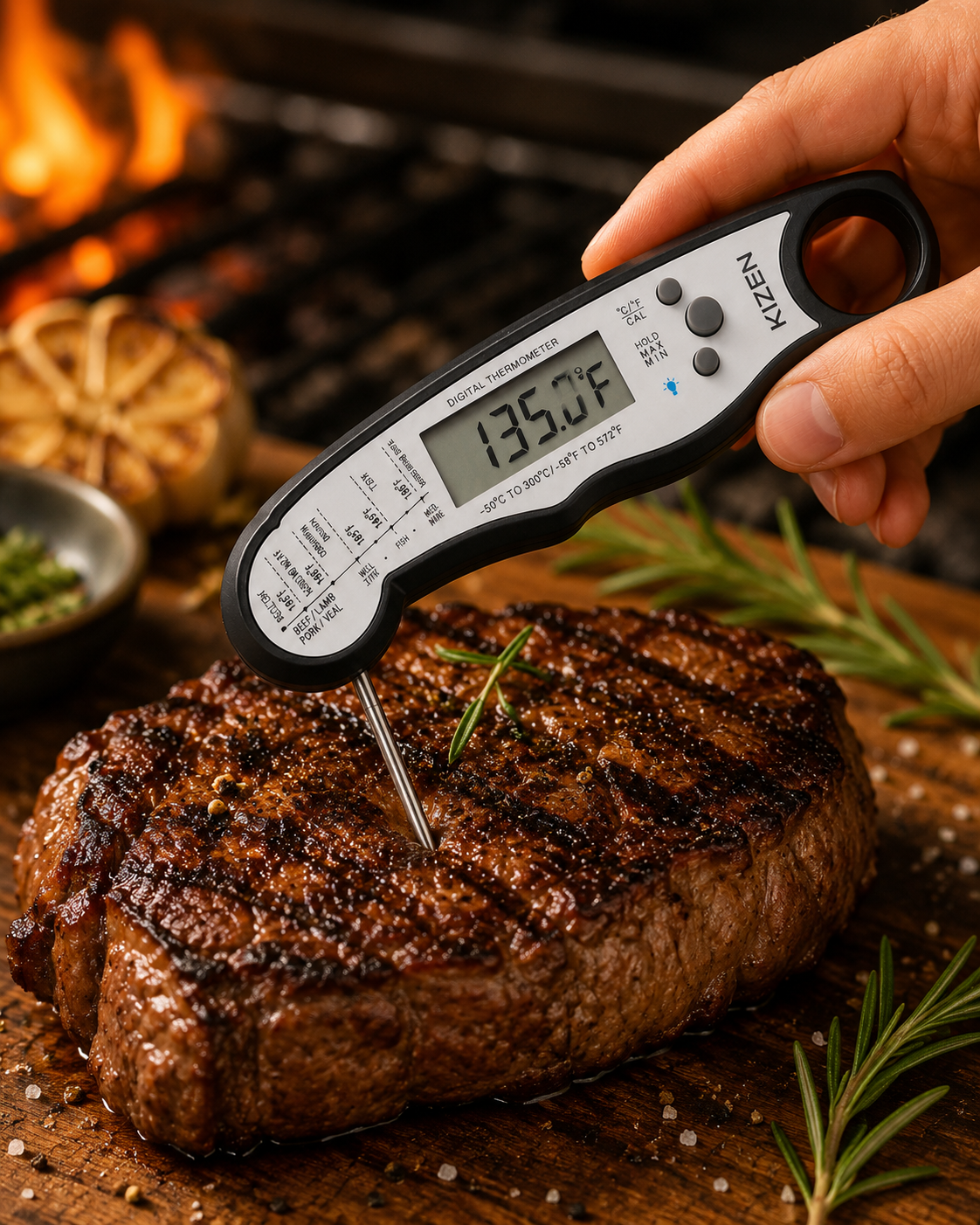
A meat thermometer sounds like a simple grill tool until you actually need to use it.
The chicken is already on the grate. The lid is open. Heat is escaping. One burger looks done, another one is still soft in the middle, and the steak near the hotter side of the grill is cooking faster than the one near the edge.
That is when the small details matter.
A good meat thermometer for grilling should be easy to reach for, easy to read, and simple to clean after it touches food. It should also match the way you cook. A thermometer that is fine for quick burgers may not be the same style someone wants for long BBQ sessions or larger cuts.
This guide walks through what to check before buying one.
Start With Your Grill Routine
Before comparing features, think about what you actually cook.
For quick grilling, burgers, chicken breasts, steak, pork chops, sausages, or weeknight meals, an instant-read probe thermometer is usually the easiest fit. You check the food, read the number, and remove the thermometer.
For bigger BBQ cuts, whole poultry, or longer cooks, you may still want an instant-read thermometer for spot checks, but the choice becomes more specific. Probe reach, screen readability, and how easy it is to use around heat become more important.
Most home grill users do not need the most complicated thermometer first. They need one that makes temperature checks quick enough that they will actually use it.
The Probe Has to Reach the Right Spot
The probe is not just a metal tip. It decides whether the reading is useful.
For grilling, the probe needs to reach the thickest part of the food without making you hold your hand too close to the grate. That is especially important with chicken, thick burgers, steak, pork chops, and BBQ cuts.
A fold-out probe can be convenient because it opens when you need it and folds back when you are done. That makes it easier to store with kitchen tools or grill accessories. A fixed probe can also work, but it may take up more space depending on the design.
The main thing is placement.
- For chicken, check the thickest part and stay away from bone.
- For burgers, it often helps to insert the probe from the side so the tip reaches the center.
- For steak, check the thicker section, especially if the cut is uneven.
- For larger BBQ cuts, one reading may not tell the whole story. Move the probe and check another area.
A thermometer can only help if the probe is in the right place.
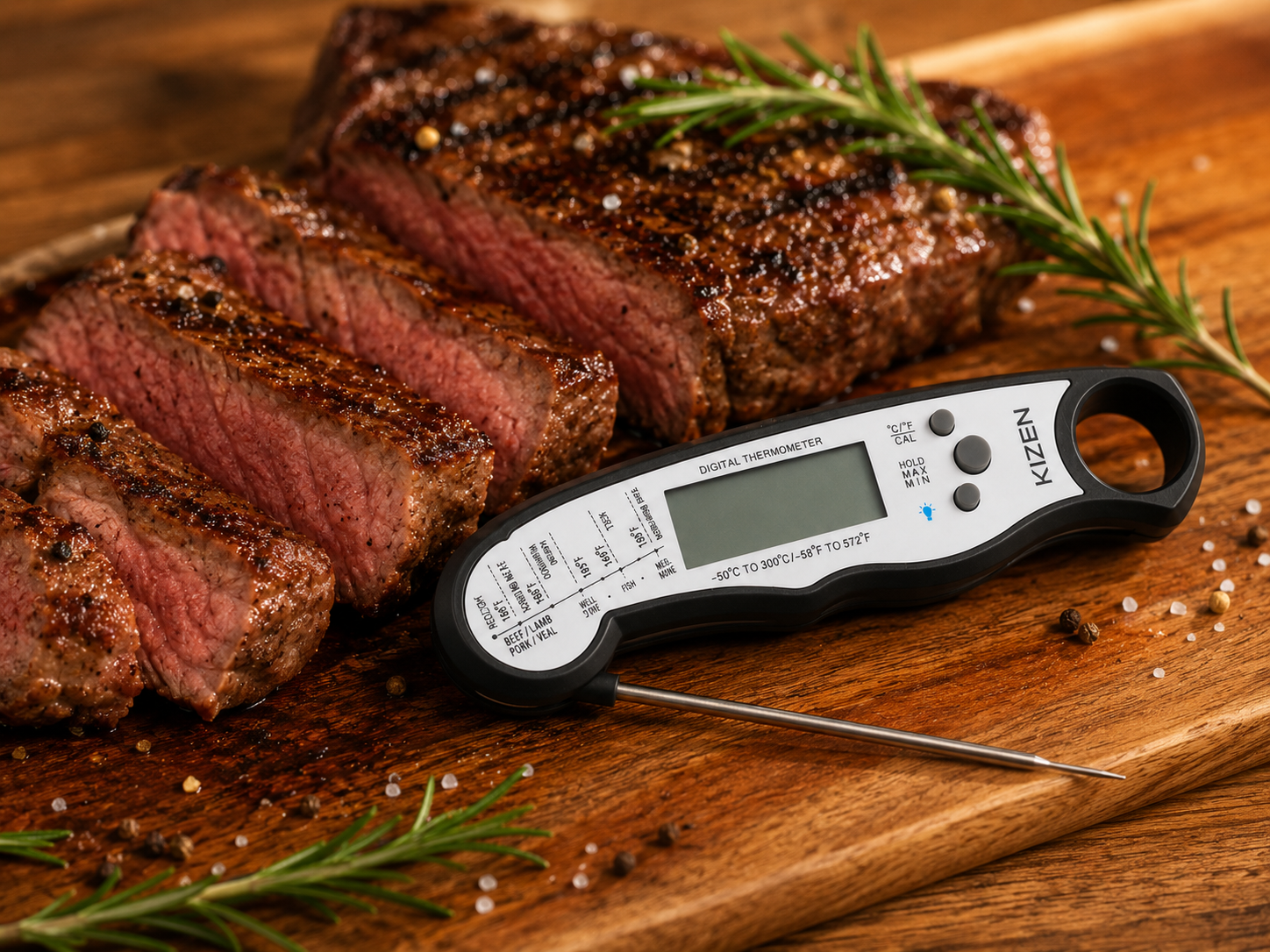
Why Grilling Makes Readings Tricky
Grilling is not as controlled as cooking on a stovetop.
One part of the grill may be hotter than another. Food near the flame can brown quickly. A thick piece of meat may look ready on the outside before the center catches up.
That is why guessing by color is risky. A dark sear does not always mean the inside is where you want it. Cooking time helps, but it does not know your grill, the thickness of the meat, or where the hot spots are.
A probe thermometer gives you a better check because it measures inside the food. That is the reading that matters for meat doneness.
An infrared thermometer is different. It can be useful for checking surface temperature on a grill, pan, or griddle, depending on the product instructions. But it does not replace a probe when you need to know what is happening inside chicken, burgers, steak, or BBQ.
The Display Needs to Work Outside
A thermometer display can look clear in a product photo and still be annoying near the grill.
Outside, the light changes. You may be cooking in bright sun, evening shade, or low light. Smoke can make the screen harder to see. You may also be holding the thermometer at an awkward angle.
This is where display readability matters.
A larger screen helps. A backlit display can be useful if you grill at night or in shaded areas. Some thermometers also mention display rotation, but check the current listing if that feature matters to you.
You do not need a fancy screen. You need numbers you can read quickly while standing near heat.
Read Speed Matters, But It Is Not Everything
Fast readings are useful on the grill. Nobody wants to stand with the lid open for too long while the heat drops.
Still, speed should not be the only reason to choose a thermometer.
A fast thermometer can still give a poor reading if the probe is in the wrong spot. If the tip touches bone, sits too close to the surface, or angles toward the grill grate, the number may not reflect the center of the food.
Look for a clear read-speed claim, but check it together with accuracy information, probe design, display visibility, and care instructions.
In real use, the best thermometer is not just fast. It is fast enough, readable, and easy to place correctly.
Cleaning Should Be Simple
Cleaning is not the exciting part of buying a grill thermometer, but it matters.
The probe may touch raw chicken, burgers, pork, or other meat. After that, it needs to be cleaned before it is used again.
Before buying, read the care instructions. Can the probe be rinsed? Can the body handle water exposure? Does the listing say not to soak it? Is it dishwasher safe, or does it clearly say hand wash only?
Do not assume that "waterproof" means dishwasher safe. Those are not always the same thing.
A thermometer for grilling should be easy enough to clean that you do not avoid using it.
Storage Affects Whether You Actually Use It
This sounds small, but it is not.
If the thermometer gets buried in a drawer, it may not become part of your grill routine. The tool you can find quickly is the tool you are more likely to use.
A fold-out probe helps with storage because the sharp part tucks away. A magnetic back can be useful if your setup has a metal surface nearby. Some people keep the thermometer with grill gloves, tongs, or other BBQ tools.
Think about where it will live before you buy it.
Near the stove? In a kitchen drawer? Beside the grill? In a BBQ tool bag?
The right storage option depends on your setup, not on the product photo.
Temperature Range and Intended Use
Do not assume every food thermometer works for every cooking task.
For grilling, most people are looking for internal meat temperature checks. But some shoppers also want to use the same thermometer for liquids, candy, baking, or other kitchen jobs.
That may be possible with some products, but it needs to be confirmed in the listing or instructions. Check the temperature range and supported uses before ordering.
The same rule applies to grill use. If the product information does not clearly fit the way you plan to cook, do not guess.
Battery and Package Details
Battery details are easy to skip, but they can matter later.
Check what battery type the thermometer uses. Check whether a battery is included. Look for an instruction guide, care notes, and any included parts in the current package information.
Listings can change. Before ordering, review the current seller notes instead of relying only on old images or copied product descriptions.
This is especially useful when buying on Amazon, where variations and sellers can differ.
Mistakes People Make When Choosing a Grill Thermometer
- Choosing only by speed.
- Buying an infrared thermometer when the real need is internal food temperature.
- Ignoring cleaning instructions after the probe touches raw meat.
- Overlooking storage and keeping the thermometer too far from the grill routine.
- Assuming every thermometer works for every food or cooking method.
What a Good Grilling Thermometer Should Feel Like in Use
A practical grill thermometer should not slow everything down.
You should be able to pick it up quickly, insert the probe into the thickest part of the food, read the number without struggling, clean the probe after use, and put it back where you can find it next time.
That is the real test.
Not the longest feature list. Not the biggest claims. Not the most dramatic product image.
For grilling, the best thermometer is the one that fits the way you cook and helps you check the inside of the food without making the process awkward.
Who Should Use a Meat Thermometer for Grilling?
A meat thermometer is useful for beginners, but it is not only for beginners.
It helps when you cook chicken and do not want to judge by color alone. It helps with burgers, especially when patties are different thicknesses. It helps with steak when you want a better read than timing alone. It helps with pork, turkey, roasts, and BBQ cuts that can cook unevenly.
It is also useful when cooking for family or guests. You do not have to rely on cutting into every piece of meat just to check what is happening inside.
Before You Buy, Check These Details
- Look at the probe style and make sure it fits the type of food you grill.
- Check whether the display is readable outside.
- Review the read-speed claim, but do not choose on speed alone.
- Check cleaning instructions carefully.
- Look at storage and whether the thermometer will be easy to keep near your grill or kitchen.
- Confirm the temperature range and intended uses.
- Check the current package contents and battery details.
That is enough for most shoppers to make a better choice.
Check the Current Product Details
Open the Amazon listing to confirm current price, specifications, package contents, battery details, cleaning instructions, and supported uses before buying.
Related Reading
- How to Choose a Digital Meat Thermometer
- Digital Meat Thermometer vs Infrared Thermometer
- KIZEN Digital Meat Thermometer Review
Affiliate Disclosure: As an Amazon Associate I earn from qualifying purchases.
Final Takeaway
A meat thermometer for grilling should be practical around heat.
It needs a probe that reaches the right part of the food, a display you can read outside, cleaning instructions that make sense, and storage that fits your setup.
For most grill users, the goal is simple: stop guessing from the outside and get a clearer reading from inside the food.